
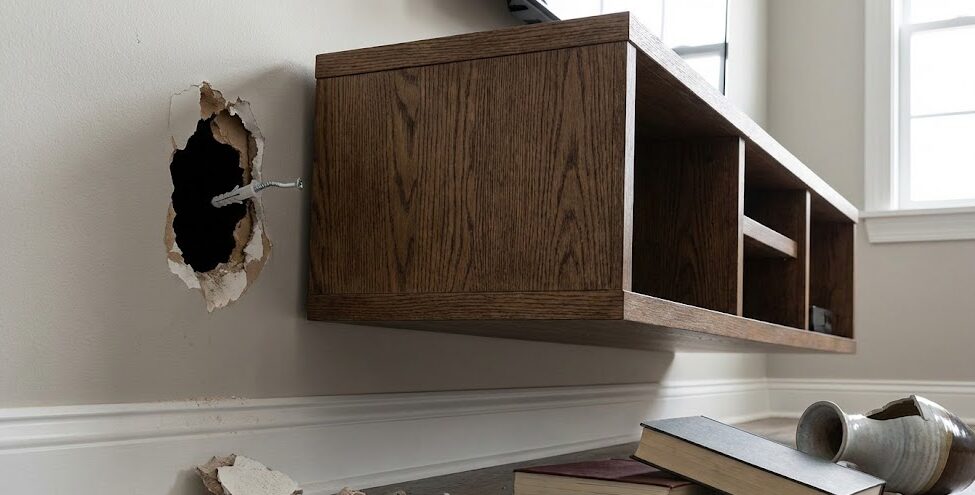
You bought a beautiful heavy mirror for your bedroom or floating shelves for your living room. Now you’re ready to hang them up. But wait. Do you know what’s hiding behind that wall? One wrong screw and you could hit electrical wires, water pipes, or mount into weak drywall that can’t hold the weight.
Here are the critical safety checks you must do before drilling any holes in your walls.
Know Your Wall Type and
Weight Limits
Drywall alone holds almost nothing. Standard drywall anchors support 10 to 50 pounds maximum depending on the type. A large mirror can weigh 30 to 100 pounds. Heavy floating shelves with books can exceed 75 pounds. Drywall anchors alone will fail, and your mirror or shelf will crash down.
Wood studs support serious weight when you screw directly into them. A single screw into a stud can hold 80 to 100 pounds. Multiple screws spread across studs can support several hundred pounds safely.
Concrete and brick walls need special anchors and hammer drills. Regular drill bits and screws don’t work. You need masonry anchors rated for the weight you’re mounting.
Safety Rules for Heavy Items
- Mirrors over 20 pounds must mount into studs with proper brackets, not just drywall anchors
- Shelves that will hold heavy items need stud mounting at every bracket location
- Bathroom mirrors near water require secure mounting because falling glass plus water creates serious injury risk
- Large mirrors should have safety backing film to hold glass together if the mirror breaks
The Dangerous Mistakes People Make
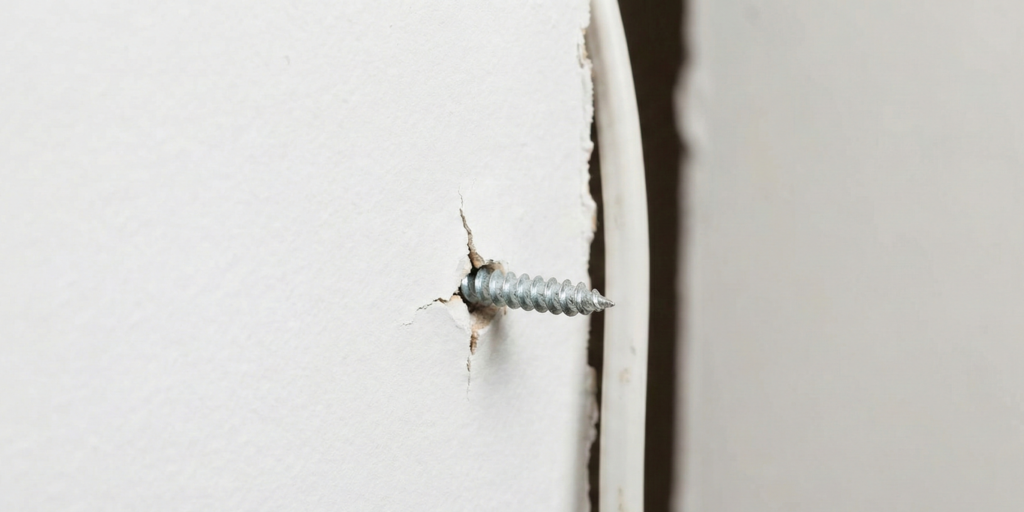
Using screws that are too long and drilling through the other side of the wall, hitting wires or pipes. Always measure your wall thickness and use screws shorter than that depth.
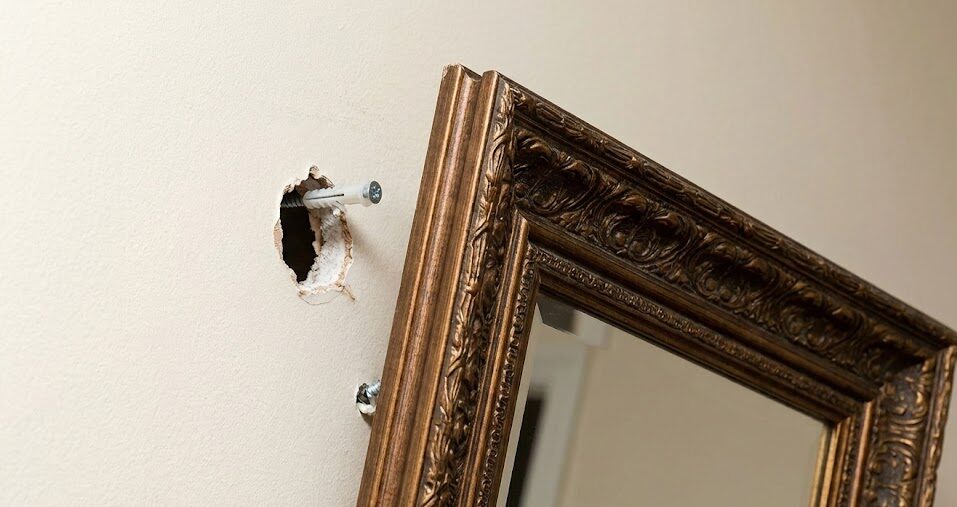
Trusting drywall anchors for heavy weight because the package says “holds 50 pounds.” That rating assumes perfect conditions and straight pull. Real world weight, especially with pulling or jarring, causes failure much sooner.
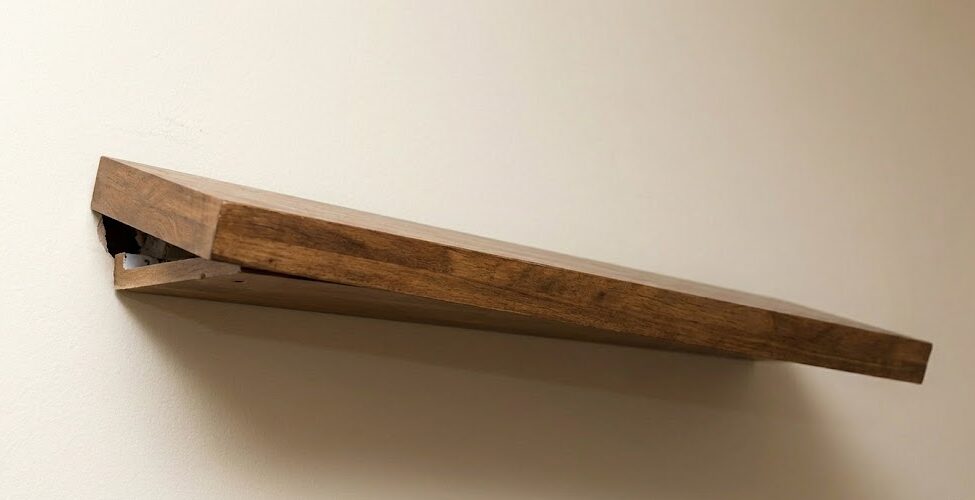
Not centering weight on studs means the item hangs crooked and puts uneven stress on mounting points, leading to failure.
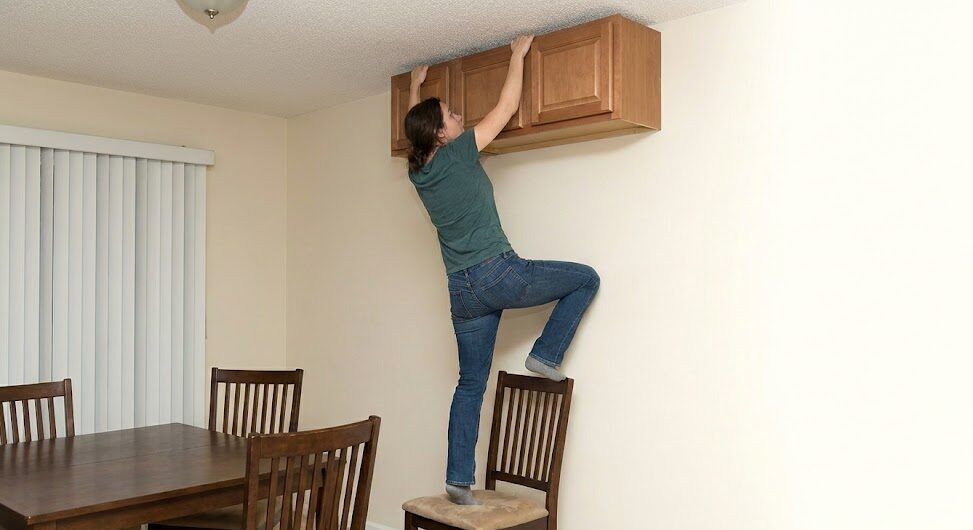
Mounting at the wrong height where you can’t reach to install properly, or where bumping into it creates hazards.
Skipping safety cables or straps for very heavy mirrors and shelves. In earthquake prone areas or homes with children, these backup attachments prevent serious injuries.
Want to know how professionals mount heavy items so they never fall? Check our next post for the step by step process that ensures safe, secure mounting.